Deep Learning Roadmap: What to Learn, in What Order, and Why
Discover a structured deep learning roadmap covering math prerequisites, environment setup, and dedicated tracks for computer vision, NLP, and generative AI.
Deep learning is an expansive and rapidly evolving field. For a beginner, the sheer volume of tutorials, papers, and frameworks can feel overwhelming. Should you start with PyTorch or TensorFlow? Do you need to learn calculus before coding? How do you transition from basic neural networks to large language models?
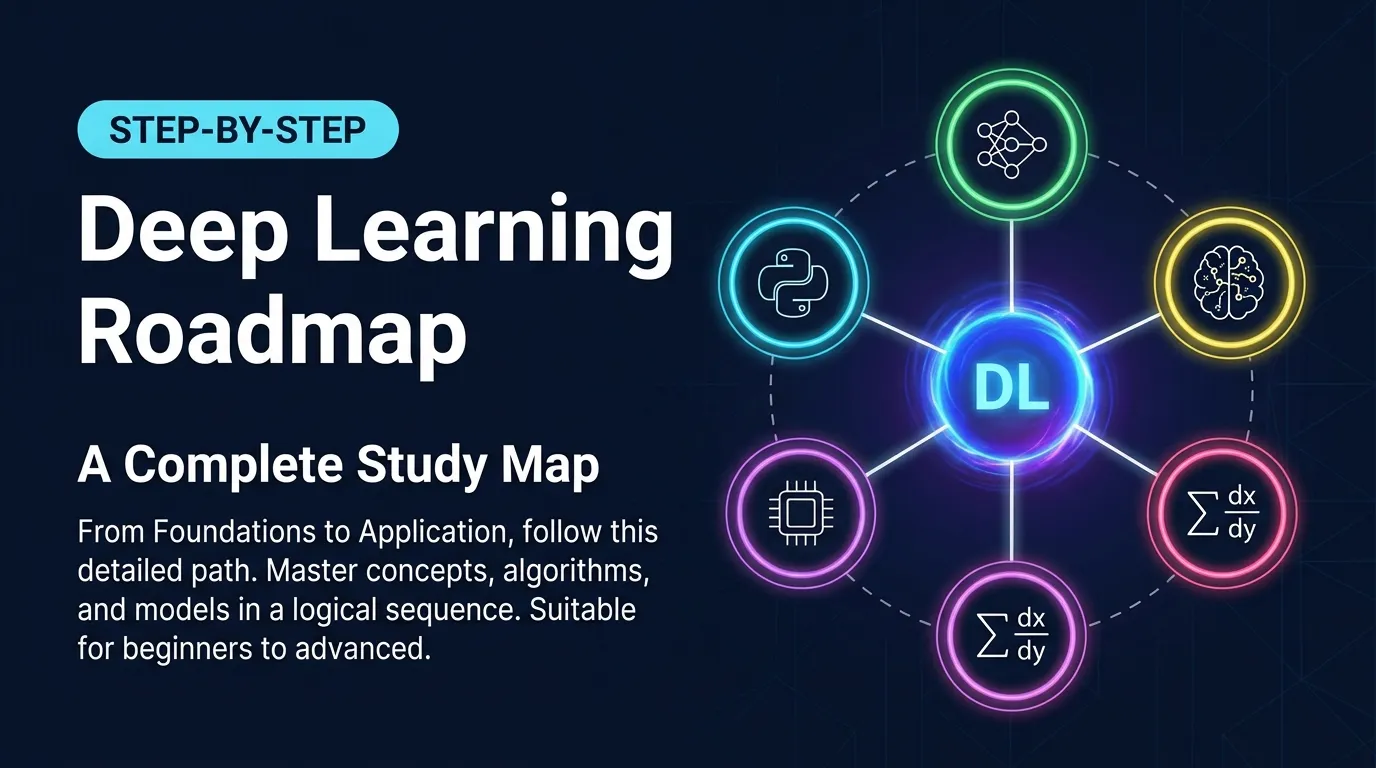
This deep learning roadmap provides a structured, logical sequence for mastering neural networks. Whether your goal is to build computer vision systems, process natural language, or develop generative AI models, success requires a solid foundation in mathematics and core concepts before branching out into specialized domains.
1. The Core Mathematical Prerequisites
Deep learning relies heavily on three branches of mathematics. You do not need a PhD to get started, but you must understand the fundamentals to debug models and comprehend how algorithms work.
- Linear Algebra: Neural networks process data in the form of scalars, vectors, matrices, and higher-dimensional tensors. You must understand vector operations, matrix multiplication (e.g., ), and the concept of dimensionality.
- Calculus: Training neural networks requires optimization. You need to be comfortable with derivatives, partial derivatives (e.g., ), and the chain rule, which forms the basis of backpropagation.
- Probability and Statistics: Machine learning models deal with uncertainty and expectations. Familiarize yourself with probability distributions, expected values, and maximum likelihood estimation, which directly translates to how loss functions are designed.
(Note: If you need a refresher, check out the dedicated mathematics series on this site.)
2. The Map of the Series: Three Learning Tracks
Our deep learning curriculum begins with a shared foundational tier, after which you can specialize based on your interests.
Foundation Tier
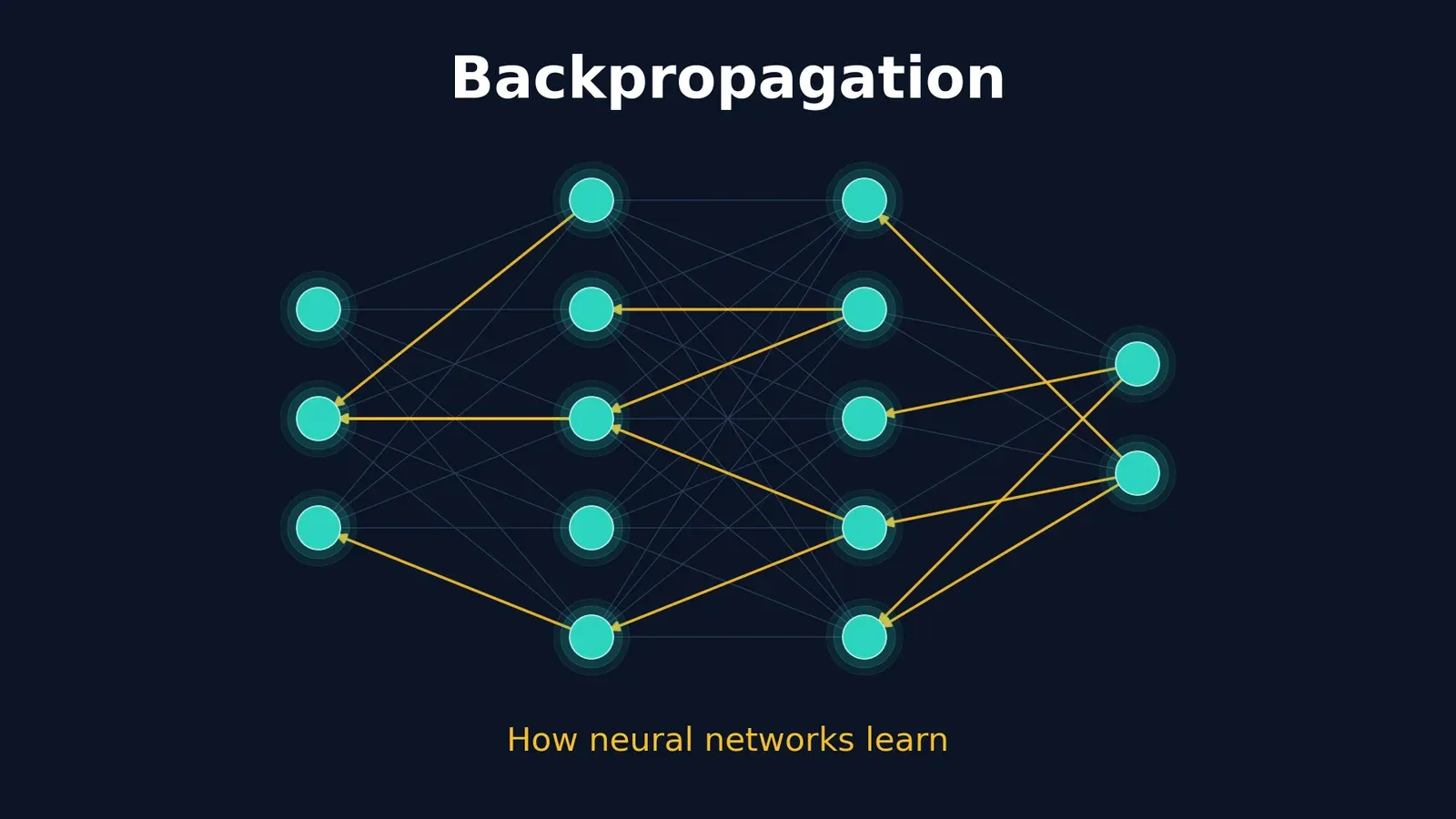
Everyone must start here. The foundation covers the mechanics of neural networks, including neurons, layers, forward propagation, loss functions, and backpropagation. You will build models from scratch using NumPy before transitioning to modern frameworks.
Specialization Tracks
Once you understand the foundations, choose one or more of these specialized paths:
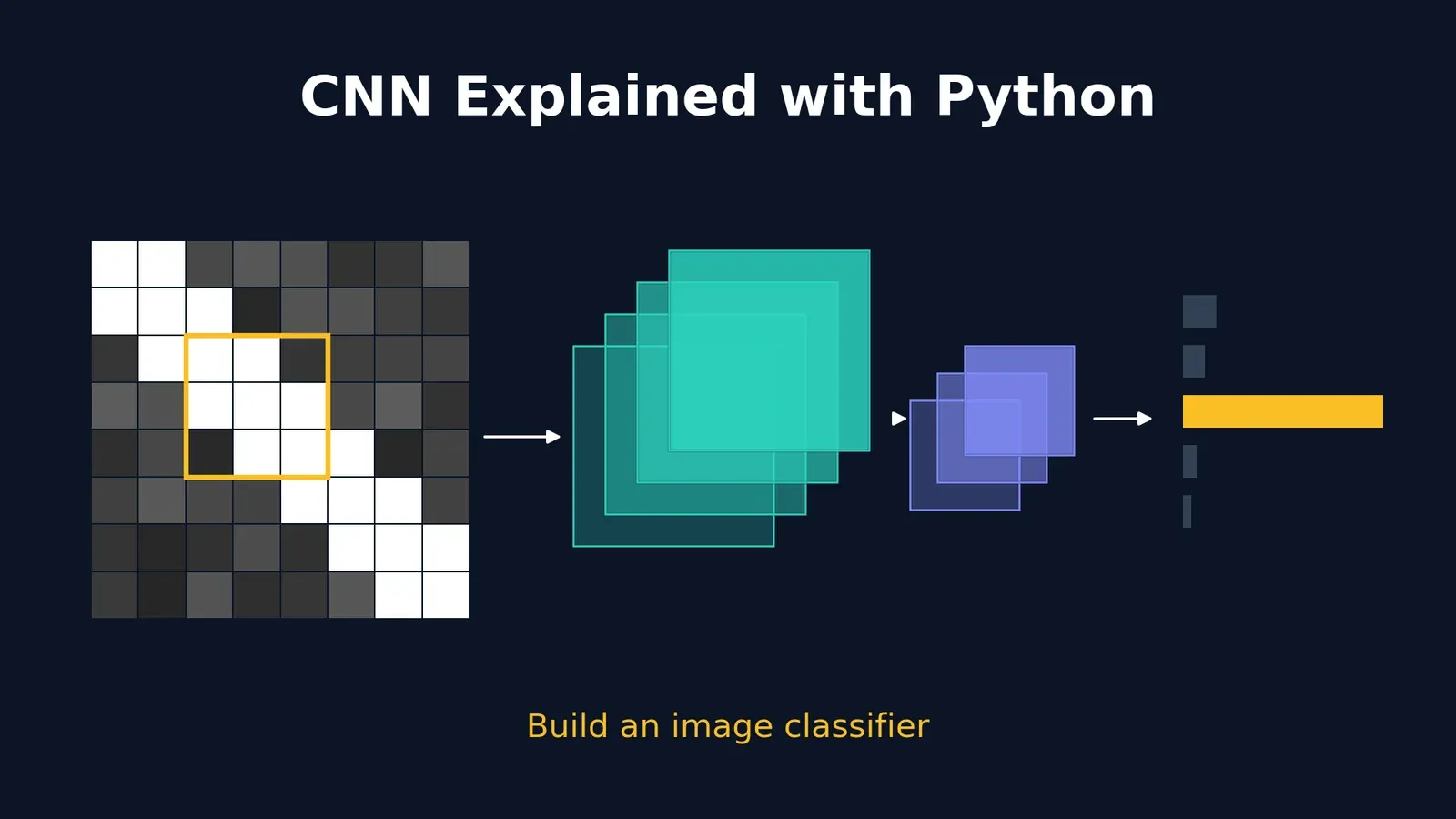
- Computer Vision: Focuses on convolutional neural networks (CNNs), image classification, object detection, and segmentation.
- Natural Language Processing (NLP): Covers text processing, recurrent neural networks (RNNs), embeddings, and transformer architectures.
- Generative AI: Explores generative adversarial networks (GANs), variational autoencoders (VAEs), and diffusion models.
3. Environment Setup: PyTorch and Your Workspace
Modern deep learning requires a specialized development environment. For this series, we will use PyTorch, the leading framework for deep learning research and development.
CPU vs. GPU
Training neural networks involves massive amounts of matrix multiplication. While a Central Processing Unit (CPU) can handle basic tutorials, a Graphics Processing Unit (GPU) dramatically accelerates training. PyTorch seamlessly handles device management, allowing you to move tensors to a GPU if one is available.
Setting Up Your Environment
To keep your dependencies clean, always use a virtual environment. Follow these steps to set up your workspace:
- Create a virtual environment using
venvorconda. - Install Jupyter Notebooks for interactive experimentation and visualization.
- Install PyTorch by following the official instructions on the PyTorch website, ensuring you select the correct CUDA version if you have a compatible NVIDIA GPU.
4. Practical Project: Environment Check Script
To ensure your setup is ready for the upcoming tutorials, let’s write a simple Python script. This script will verify your Python and PyTorch installations, perform a basic tensor operation, and check if a GPU is accessible to PyTorch.
import sys
import torch

def check_environment():
    print(f"Python Version: {sys.version.split()[0]}")
    print(f"PyTorch Version: {torch.__version__}")

    # Run a simple tensor operation
    x = torch.rand(3, 3)
    y = torch.rand(3, 3)
    z = torch.matmul(x, y)
    print("\nTensor Operation Successful!")
    print(f"Sample output matrix shape: {z.shape}")

    # Check GPU availability
    if torch.cuda.is_available():
        print(f"\nGPU is visible: {torch.cuda.get_device_name(0)}")
    else:
        print("\nGPU is not visible. Computations will run on CPU.")

if __name__ == "__main__":
    check_environment()
Run this script. If it executes without errors and reports your PyTorch version, you are fully prepared to begin your deep learning journey.
Next Steps
Now that your roadmap is clear and your environment is configured, it’s time to build your first model. In the next article, we will answer the most fundamental question: What exactly is a neural network?